
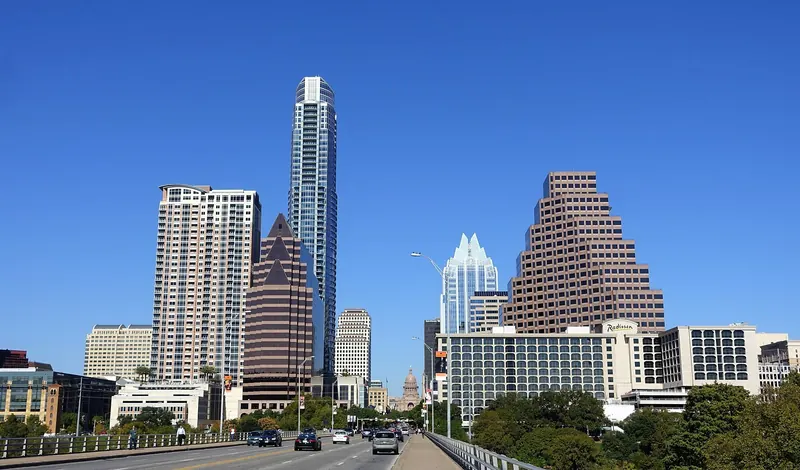
West of MoPac and Loop 360, Austin's neighborhoods climb into limestone hills covered in juniper and oak. East of I-35, the land flattens into prairie and farmland that has been filling with new homes. That geography shapes smoke claims here more than in most Texas cities, because a large share of the metro sits close to wildland vegetation.
We are a Smoke Damage Public Adjuster in Austin, Texas for policyholders: Rise Public Adjusting LLC, licensed by the Texas Department of Insurance (License #3356839). We represent homeowners, condo owners, landlords and businesses in their property claims, working remotely and on-site as needed. We have no Austin office, and we are not a restoration contractor. We help document, prepare, present and negotiate the claim.
Living in the wildland-urban interface
The wildland-urban interface is where homes and other development meet or mix with undeveloped land. Much of western Travis County and neighboring Williamson and Hays counties fits that description.
The Texas A&M Forest Service describes the Hill Country oak savannah, a combination of timber, brush and grass widespread along and west of Interstate 35, as a fuel type associated with significant wildfires. East of Austin, the agency identifies the pine and yaupon mix found in the Lost Pines area as a high-risk fuel type where surface fire can climb into the tree canopy. The 2011 Bastrop Complex fire in that area remains a reference point for how serious wildfire can be in Central Texas.
Most Austin homeowners will never see flames near their house. The more common experience is smoke: drifting in from a fire miles away, collecting in attics and HVAC systems, and leaving odor and fine residue behind.
Austin's property mix
Hill Country homes. Custom and semi-custom homes in the western hills often have high ceilings, large windows, stone and wood finishes, and extensive landscaping. Those features can complicate cleaning scope and matching discussions.
Central neighborhoods. Older bungalows and ranch homes in areas like Hyde Park, Travis Heights and Crestview may have original wood floors, plaster and additions built in different eras.
Condos and apartments. Downtown and the areas around the University of Texas have a large stock of high-rise and mid-rise residential buildings. Smoke in these buildings can travel through corridors and shared systems, and claims often involve both an association policy and a unit-owner or renter policy.
Fast-growing suburbs. Round Rock, Pflugerville, Leander, Kyle and Buda have added large numbers of new homes. Newer construction tends to have attic HVAC, open floor plans and many electronics, all of which matter in a smoke claim.
Commercial property. Offices, technology and research facilities, restaurants and retail all bring their own contents, equipment and business income questions.
What an Austin smoke claim often involves
Contents and electronics
Smoke residue can affect clothing, upholstered furniture, books and electronics. Building a contents inventory is often the most time-consuming part of a claim. Our smoke-damaged contents guide explains the process, and the contents RCV/ACV calculator shows how depreciation can affect item values.
Persistent odor
Odor can hang on in insulation, carpet pad and ductwork. Our smoke odor claims page covers how odor is usually documented. For system-related issues, see HVAC smoke damage.
Additional living expense
If a home cannot be lived in while the damage is addressed, some policies provide for additional living expenses. Austin's housing costs can make that part of the claim significant. Whether and how it applies depends on your policy.
How our work fits in
A Smoke Damage Public Adjuster represents you, not the insurer. On an Austin claim we typically:
- Review the full policy, including endorsements and limits
- Inspect and document the damage throughout the property
- Prepare a building estimate and help organize the contents inventory
- Compare the carrier's estimate with the documented scope
- Present the claim and respond to follow-up requests
We cannot promise coverage or a particular result; those depend on your policy and the facts. For an overview of each stage, see the smoke damage claim process. If you are unsure how licensing works, our Texas public adjuster rules page explains the basics.
Serving the greater Austin area
We work with policyholders throughout Travis, Williamson, Hays and Bastrop counties, including Round Rock, Georgetown, Pflugerville, Cedar Park, Leander, Lakeway, Bee Cave, Kyle, Buda and Bastrop. Neighboring city pages include Round Rock, Georgetown and San Marcos.
Do you have an office in Austin?
No. We represent policyholders across Texas without local offices. We communicate by phone and email and schedule on-site inspections when needed.
Wildfire smoke came into my house but there was no fire on my property. Can I make a claim?
Possibly. Whether wildfire smoke damage is covered depends on your policy language and what can be documented at your home. Dated photos of residue, notes about odor, and records of any expenses are helpful.
My condo was affected by a fire elsewhere in the building. What happens now?
The association's master policy and your own unit-owner policy may each apply to different parts of the loss. The governing documents and policy wording set the line between them.
Does living in the Hill Country change how a claim is handled?
The claim process is the same, but the property features common in the Hill Country, such as large windows, high ceilings, and natural stone and wood finishes, can affect the documentation and scope.
How soon should I contact someone about a smoke claim?
Your policy has its own notice and documentation requirements, so read it early and notify your insurer promptly. You can contact us at any stage for a free review.
Nearby communities we serve
- Round Rock
- Georgetown
- Pflugerville
- Cedar Park
- Leander
- Lakeway
- Bee Cave
- Kyle
- Buda
- Bastrop