
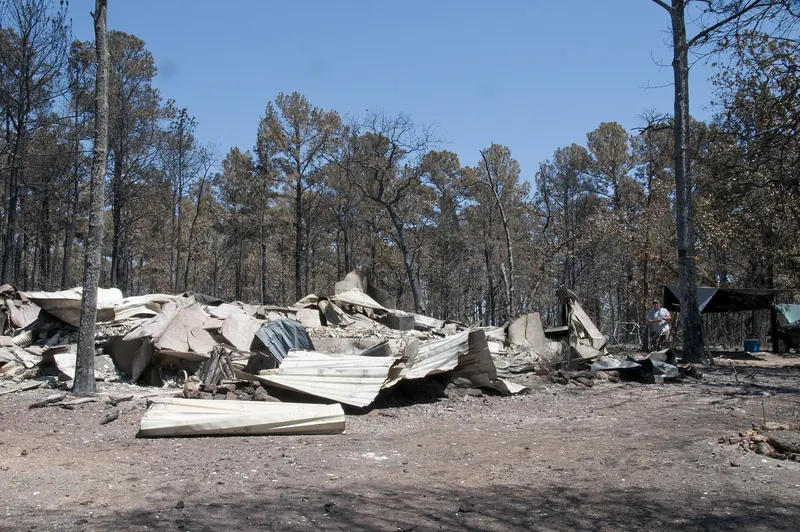
After a fire, the burned area gets most of the attention. That makes sense. It is the most obvious damage and usually the most dramatic.
But a fire damage insurance claim is often made up of several overlapping types of damage, and some of them reach well past the room where the fire started. Flame and heat damage the immediate area. Smoke and soot travel through the building. Water from firefighting soaks materials that never burned. Demolition may be needed to reach hidden damage. And the household or business may be displaced for months.
Each of these needs to be identified, documented, and accounted for in the claim. This page explains the pieces, what to watch for in the carrier's estimate, and when a fire damage public adjuster may be useful.
We are Smoke Damage Public Adjuster, operated by Rise Public Adjusting LLC (TDI License #3356839). We represent policyholders in fire and smoke claims throughout Texas. We are not a restoration or construction company.
The layers of a fire loss
Direct flame damage
This is the damage most people picture: burned framing, charred drywall, destroyed cabinets and furniture, melted fixtures. It is usually concentrated in and around the area where the fire started.
Direct flame damage is often clearly documented in the carrier's inspection. The questions tend to come up around how far the damage extends, whether structural members were affected, and what the repair actually requires.
Heat damage
Heat can damage materials that never touched a flame. Examples include warped or discolored finishes, cracked glass, melted plastic components, blistered paint, damaged wiring insulation, and deformed window frames or fixtures in nearby rooms.
Heat damage can be subtle. It may not look like fire damage at first, so it is worth looking closely at rooms adjacent to the fire.
Smoke and soot
Smoke and soot are often the most widespread part of a fire loss. Residue can travel through hallways, open doors, attic spaces, wall cavities, and the HVAC system, and settle on surfaces and contents throughout the property.
We cover this in depth on our smoke damage insurance claims and soot damage claims pages. For persistent odor issues, see smoke odor claims.
Fire-suppression water
Firefighters may use a large volume of water to put out a fire. That water can soak drywall, insulation, subfloor, flooring, cabinets, and contents, and it can move into rooms and lower floors that were never near the flames.
Water damage connected to firefighting is a separate part of the loss from the fire itself. It may call for drying, removal of wet materials, and replacement, depending on what qualified professionals find. It should be documented as its own category, with photos taken as early as possible.
Demolition and debris removal
Repairing fire damage often requires removing damaged materials first. That can include tearing out drywall, insulation, flooring, cabinets, and sometimes framing, plus hauling away debris.
These costs are part of the repair, and they are sometimes underestimated. It is worth checking whether the carrier's estimate includes the demolition and debris removal that the repair actually requires. Some policies also have specific provisions or limits for debris removal, so review the policy language.
Building systems
Fires can affect building systems that are easy to overlook:
- Electrical. Wiring, outlets, panels, and fixtures near the fire or exposed to heat or water.
- HVAC. Equipment, ductwork, and returns that may have carried smoke through the building. See HVAC smoke damage.
- Plumbing. Pipes and fixtures exposed to heat.
- Roofing and attic. Damage from flame, heat, smoke, or the fire department ventilating the roof.
Qualified electricians, HVAC contractors, and other trades may need to evaluate these systems. Their findings can support the claim. We do not inspect or repair building systems ourselves.
Contents in a fire claim
Contents are often a major part of a fire damage claim. Items may be burned, heat-damaged, smoke-damaged, soot-covered, or water-damaged, and a single room can contain all of these.
Building a contents inventory after a fire is hard. Some items are gone entirely. Others are damaged but still present. Some may be taken off-site for cleaning. Keeping track of everything takes organization.
A useful contents inventory usually includes:
- A description of each item
- Quantity
- Approximate age and where it was purchased, if known
- Condition before the loss
- Replacement cost
- Photos, receipts, or records supporting the item
Depending on your policy, contents may be paid on an actual cash value basis first, with additional replacement cost available after items are replaced. Our contents RCV/ACV calculator can help you understand the difference. For more, see smoke-damaged contents.
Loss of use and temporary housing
If a fire makes your home unlivable, your policy may include Additional Living Expenses (ALE) or loss of use coverage. This may help with added costs of temporary housing, meals, mileage, and similar expenses above your normal costs while repairs are underway.
What is available depends on your policy. Limits can be based on dollar amounts, time periods, or both. Keep every receipt, track your normal monthly expenses for comparison, and confirm with the carrier in writing what your policy provides and for how long.
Fire repairs can take a long time. If the repair timeline changes, communicate that to the carrier with supporting information.
Business interruption for commercial fires
A fire at a business may disrupt operations for weeks or months. If the policy provides business income or business interruption coverage, it may address lost income during the restoration period, and extra expense coverage may help with the added cost of continuing operations.
These coverages vary widely from policy to policy. They often involve waiting periods, specific definitions of the restoration period, and documentation of financial records. Business owners should expect to provide financial statements, tax records, payroll records, and similar information.
A commercial fire claim may also include building damage, tenant improvements, inventory, equipment, and business personal property. See commercial smoke damage claims for more on business losses.
Reviewing the carrier's estimate
After the inspection, the carrier will usually prepare an estimate. It is worth reading line by line.
| Area of the loss | Questions to check in the estimate |
|---|---|
| Fire-origin area | Does the scope reflect the actual extent of burned and heat-damaged materials? |
| Adjacent rooms | Is heat, smoke, and soot damage outside the fire room included? |
| Firefighting water | Are drying, removal of wet materials, and replacement addressed where needed? |
| Demolition and debris | Are tear-out and hauling included at a realistic scope? |
| Building systems | Were electrical, HVAC, plumbing, and roofing evaluated? |
| Contents | Is every affected room's contents included? |
| Loss of use | Does the ALE timeline match the expected repair schedule? |
| Code-related items | Does the policy include any coverage for code-required upgrades, and was it considered? |
These are questions, not conclusions. Whether a particular item is owed depends on the damage, the documentation, and the policy language.
Our smoke damage scope calculator can help you organize the affected areas before you compare them to the estimate.
Documentation for a fire damage claim
Useful documentation after a fire
- Photos and video of all damage, including rooms away from the fire
- Photos of water damage taken as early as possible
- A room-by-room contents inventory
- Receipts, account records, and photos supporting what you owned
- The fire department report, if available
- Findings from any contractors, electricians, HVAC professionals, or other specialists
- ALE receipts and a log of normal household expenses
- All letters, emails, and estimates from the carrier
- A complete copy of your policy, including endorsements
Documentation will not guarantee any particular outcome. It helps the carrier see the full picture and gives you a clear basis for any disagreement.
When a fire damage public adjuster may be useful
Some fire claims are straightforward. Others involve multiple types of damage, a long repair, a large contents inventory, displacement, or business income. Those are the claims where having a licensed public adjuster on your side may be useful.
A public adjuster may help when:
- The damage extends well past the fire area
- Water, smoke, and fire damage overlap
- The contents inventory is large or complicated
- You are displaced and managing ALE
- A business is dealing with interruption and extra expense
- You disagree with the carrier's scope or pricing
- The claim has been denied, underpaid, or delayed
As a Smoke Damage Public Adjuster, we review the policy, document the full loss, prepare the claim with supporting information, and present and negotiate it with the carrier. We do not guarantee any result, and we do not perform restoration or construction. You can read about the claim process and our Texas service area.
What does a fire damage insurance claim usually include?
It can include direct flame and heat damage, smoke and soot, water from firefighting, demolition and debris removal, building systems, contents, and loss of use. What is covered depends on your policy and the facts of the loss.
Is water damage from firefighting part of a fire claim?
Water used to put out a fire often causes significant damage. Whether and how it is addressed depends on your policy, but it should be documented as part of the loss.
How long does a fire damage claim take?
It varies with the size of the loss, the contents inventory, the repair timeline, and how quickly information is exchanged. Larger losses often take longer.
Does my policy pay for temporary housing after a fire?
Many homeowners policies include some form of Additional Living Expenses or loss of use coverage, but limits and terms vary. Check your policy and confirm with the carrier in writing.
Can a business recover lost income after a fire?
If the policy includes business income or business interruption coverage, it may apply. These coverages have specific terms and documentation requirements, so review the policy carefully.
Do you repair fire damage?
No. We are a public adjusting company. We handle the insurance claim on your behalf. Restoration and construction are done by contractors you choose.