
Smoke Damage Public Adjuster is the name we use for the smoke and fire claim work of Rise Public Adjusting LLC, a Texas public adjusting company licensed by the Texas Department of Insurance (License #3356839). SmokeDamage.com is where we focus that work: explaining how smoke, soot, and fire claims tend to unfold, and offering policyholders a way to have someone on their side look at the claim.
We work throughout Texas. Whether the loss is a kitchen fire in a single-family home, smoke that drifted into a business from a neighboring unit, or wildfire smoke that settled into a property miles from the flames, the questions we ask are the same: what was damaged, how can it be shown, and what does the policy say about it?
Who we represent
We represent policyholders. That means homeowners, renters, landlords, business owners, and property managers who have an insurance policy and a loss they are trying to get properly evaluated.
We do not represent insurance companies. The adjuster who inspects your property on behalf of your carrier, whether a staff adjuster or an independent adjuster hired by the carrier, works for the insurer. A public adjuster is licensed to work for the person who holds the policy. That difference shapes everything about how we approach a claim.
What a public adjuster does
A public adjuster helps a policyholder prepare, document, present, and negotiate an insurance claim. In practical terms, that usually includes:
- Reviewing the policy so the claim is built around the actual coverage language
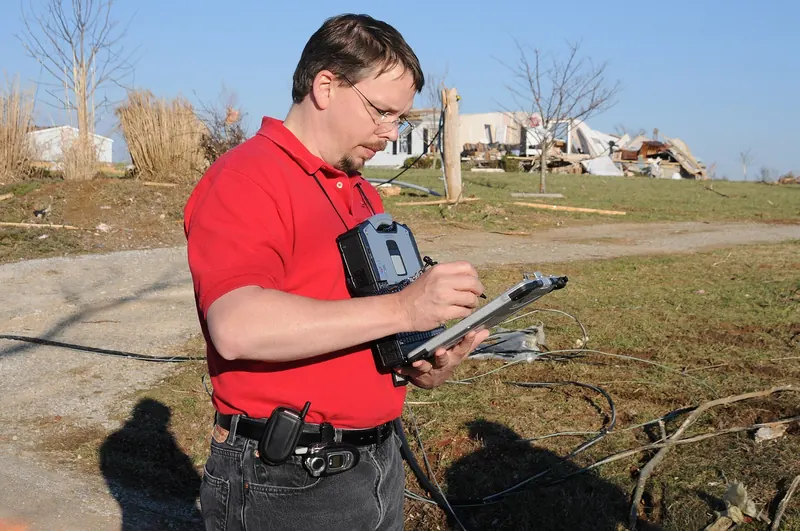
- Inspecting and documenting the damage to the building and, where relevant, the contents
- Preparing a detailed estimate of the loss
- Organizing supporting information such as photos, inventories, and receipts
- Presenting the claim to the insurance company and responding to its questions
- Comparing the carrier's estimate against the documented scope and requesting a closer review where items appear to be missing
A public adjuster does not decide coverage. The insurance company makes coverage decisions based on the policy and the facts of the loss. Our role is to make sure those decisions are made with a complete and well-organized picture of what happened. For a closer look at how that works step by step, see the smoke damage claim process.
Why smoke and fire claims require detailed documentation
Fire damage is usually obvious. Smoke damage often is not.
Smoke travels. It moves through hallways, into closets, up stairwells, and through HVAC systems and ductwork. It can leave soot residue on surfaces that look clean at a glance, and it can leave odor in porous materials like insulation, carpet pad, drywall, and upholstery. Rooms far from the point of origin can be affected in ways that are easy to miss during a short inspection.
Because of that, a smoke claim often turns on documentation. An estimate that addresses only the room where the fire started may not reflect what happened in the rest of the property. Questions about whether items can be cleaned or need to be replaced, whether surfaces need sealing and repainting, or whether systems need professional evaluation all depend on what the evidence shows and what the policy covers.
Our job is to gather that evidence in an organized way so the claim is evaluated on the full scope of the loss rather than on the most visible part of it.
Residential claims
Most of the smoke and fire claims we see involve homes. A residential claim can include damage to the structure, damage to personal property, and, when the home is not livable, additional living expenses. Each part is handled under different sections of the policy, with different limits and conditions.
For homeowners, the process can be disorienting. You may be dealing with temporary housing, a restoration company, a mortgage company, and an insurance adjuster at the same time, all while trying to figure out what you lost. We help by taking on the claim preparation work: documenting the damage, building the estimate, and communicating with the carrier about the scope.
You can read more about how we approach home claims on our residential smoke damage claims page.
Commercial property claims
Businesses face a different set of pressures after a fire or smoke event. There may be inventory, equipment, fixtures, tenant improvements, and business income issues, along with lease obligations and the need to reopen as soon as practical.
Commercial policies also tend to be more varied than homeowners policies. Coverage forms, endorsements, deductibles, and limits differ significantly from one policy to the next. That makes the policy review step especially important.
We work with owners and managers of offices, retail spaces, restaurants, warehouses, multifamily properties, and other commercial buildings. See commercial smoke damage claims for more detail.
Contents claims
Personal property is often the most time-consuming part of a smoke claim. Clothing, furniture, bedding, electronics, books, kitchen items, and decor can all absorb smoke and soot. Each item may need to be listed, described, valued, and evaluated for whether cleaning is appropriate or replacement is warranted under the policy.
Contents claims also raise questions about replacement cost value, actual cash value, and depreciation. The way those terms apply depends on the policy. Our smoke-damaged contents page walks through what a contents claim involves, and the contents RCV/ACV calculator can help you organize values as you build an inventory.
We help policyholders build inventories that are organized, consistent, and supported by photos and descriptions, so the contents portion of the claim can be reviewed item by item.
Our approach to documentation
Documentation is the core of what we do. On a smoke or fire claim, that typically means:
- Room-by-room inspection. We look at the whole property, not only the area near the fire.
- Photographs and notes. We record what we see, including residue on surfaces, conditions inside cabinets and closets, and areas connected by airflow.
- A detailed estimate. We prepare a line-item estimate of the damage to the building based on what the documentation shows.
- Contents organization. We help structure the inventory so each item has a description, a quantity, and supporting information where available.
- Comparison to the carrier's estimate. When the insurer has issued an estimate, we compare it to our documented scope and identify differences in a way that is specific and easy to follow.
We are not trying to create conflict. We are trying to make sure the claim file reflects what actually happened to the property, so the insurance company can evaluate it accurately.
Our approach to communication
Claims take time, and it helps to know what is going on. We aim to keep clients informed about where the claim stands, what the insurer has asked for, and what the next step is.
With the insurance company, we try to be clear and professional. We present documentation, explain our reasoning, answer questions, and ask for a closer look when something appears to have been missed. Most claim discussions go better when both sides are working from the same organized information.
We also try to be straightforward with policyholders about what we can and cannot do. No public adjuster can guarantee an outcome. What we can do is prepare and present your claim carefully.
Policyholder representation: what we are and what we are not
Because smoke and fire claims involve several different professionals, it helps to be clear about where we fit.
We are not the insurance company's adjuster. The carrier's adjuster represents the insurer. We are licensed public adjusters who represent you.
We are not a restoration contractor. We do not clean, remediate, demolish, repair, or rebuild. We do not perform repairs on claims we adjust. Restoration companies and contractors do that work; our work is on the claim itself.
We are not a law firm. We do not give legal advice. If your situation involves legal questions, such as a dispute that may need to go to litigation, you should speak with a licensed Texas attorney.
Public adjusters in Texas are licensed and regulated by the Texas Department of Insurance, and representation begins only with a signed written contract. You can learn more on our Texas public adjuster rules page.
About the articles
The articles on SmokeDamage.com are written by Joseph Dittman. They are meant to explain how smoke, soot, and fire claims commonly work: how damage is documented, how estimates are structured, what terms like depreciation and actual cash value mean, and what questions tend to come up along the way.
The articles are educational. They are not legal advice and they are not coverage determinations. Every policy is different, and every loss has its own facts. If you have a question about your specific claim, the best next step is to talk to someone who can look at your policy and the damage.
You can find the articles on the blog, and answers to common questions on our FAQ page.