
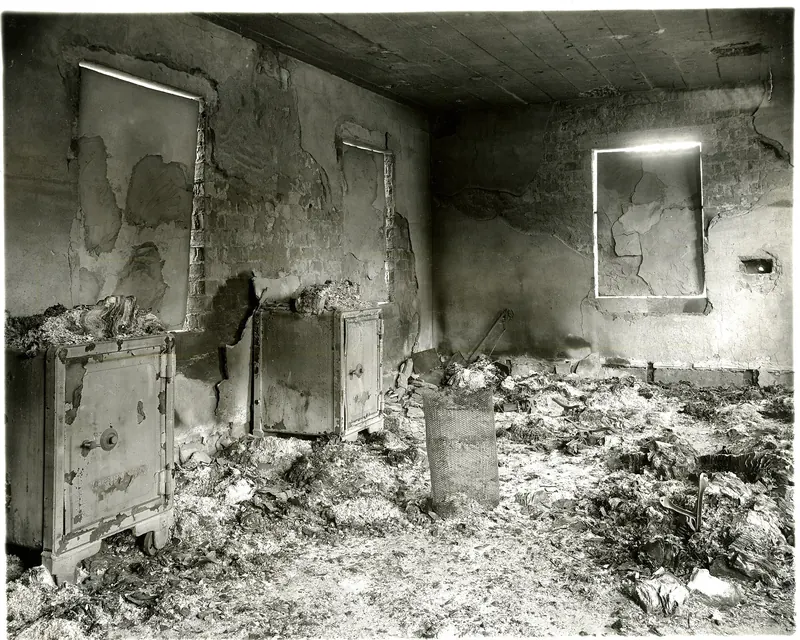
Soot is the residue left behind when materials burn. In a property claim, it is often the most widespread form of damage after a fire, reaching rooms, closets, attics, and contents that the fire itself never touched.
It is also one of the most debated parts of a claim. Soot can be heavy and obvious or light enough to miss. It affects some materials differently than others. And the question of whether a soot-covered surface or item can be cleaned, or needs to be replaced, is at the center of many disagreements.
This page explains soot damage in general property-claim terms: what it is, where it tends to show up, and how it is documented. We are Smoke Damage Public Adjuster, operated by Rise Public Adjusting LLC (TDI License #3356839). We represent policyholders. We do not clean, test, or remediate soot, and nothing here is environmental or health advice.
What soot looks like in a claim
Different fires produce different residue, depending on what burned and how. In general terms, policyholders and adjusters often see:
- Dry, powdery residue that smudges when touched
- Oily or sticky residue that smears and resists wiping
- Heavy, dark deposits near the fire origin
- Thin films that dull surfaces or leave a gray cast in rooms farther away
- Staining and discoloration on paint, grout, fabrics, and finishes
Identifying the exact nature of residue is a technical question. On larger or more complicated losses, restoration professionals or industrial hygienists may evaluate it. Their findings can become part of the claim documentation. We describe what we observe and use qualified findings; we do not make laboratory or environmental determinations.
Visible soot
Visible soot is the easier part to document. It tends to be heaviest near the fire and on ceilings and upper walls, since smoke rises before it spreads.
Common places to photograph visible soot include ceilings, upper walls and corners, window sills and blinds, light fixtures and ceiling fans, tops of cabinets and door frames, and around vents and returns.
Visible soot usually appears in the carrier's inspection photos. The questions tend to focus on how far it extends and whether the estimate reflects that full extent.
Fine particulate residue
Some soot is not easy to see. Fine residue can settle on surfaces as a thin layer that only becomes obvious when you wipe it with a white cloth or look at the surface in angled light.
Fine residue is often found in:
- Rooms away from the fire, especially along the path smoke traveled
- Inside closets, drawers, and cabinets
- On electronics and inside their vents
- Along baseboards and in carpet
- In the attic and on insulation
- Inside the HVAC system
Because it is easy to miss, fine residue is one of the most common reasons a smoke claim scope is narrower than the actual damage. Documenting it takes a careful, room-by-room approach. Photos with a wipe test, taken in consistent light, can help show what is there.
How soot affects different surfaces
The type of surface makes a large difference in how soot damage is evaluated.
Nonporous surfaces
Glass, glazed tile, sealed metal, and some finished surfaces do not absorb residue easily. Soot on these surfaces may respond to professional cleaning, though heavy or oily residue, etching, or discoloration can still be an issue.
Porous surfaces
Unsealed wood, flat paint, drywall, acoustic ceilings, grout, fabric, carpet, and insulation can hold residue and odor within the material. These are the materials where cleaning may be less effective and replacement questions come up most often.
Semi-porous and finished surfaces
Painted trim, laminate, some countertops, and finished wood fall in between. Results often depend on the finish, the residue, and how long it sat before cleaning.
| Material type | Examples | Common claim questions |
|---|---|---|
| Nonporous | Glass, glazed tile, sealed metal | Did cleaning remove residue fully? Is there etching or discoloration? |
| Semi-porous | Painted trim, laminate, finished wood | Did cleaning restore the finish? Will cleaned areas match? |
| Porous | Drywall, flat paint, carpet, fabric, insulation | Does the material hold residue or odor after cleaning? Is replacement warranted? |
This is a general framework, not a rule. Every loss is different, and what is appropriate depends on the facts and qualified findings.
Specific items and areas
Cabinets
Kitchen and bathroom cabinets are a frequent point of discussion. Soot can settle on cabinet faces, tops, interiors, shelves, backs, and hardware. Cleaning the fronts may not address interiors or unfinished backs and edges. When some cabinets are replaced and others are cleaned, matching can become a question.
Electronics
Televisions, computers, gaming systems, and appliances pull air through their vents and can collect residue inside. Whether an electronic item can be cleaned and restored is a technical question for qualified electronics restoration professionals. Their evaluation can help support the claim.
Textiles
Clothing, bedding, curtains, upholstery, and rugs can hold both residue and odor. Some items may respond to specialized cleaning. Others may not, particularly delicate fabrics or items with heavy residue.
HVAC
If the HVAC system ran during or after the fire, it may have drawn soot into returns and ducts and distributed it through the building. Soot in the system can also redeposit residue after the home has been cleaned. See HVAC smoke damage claims for more. We do not inspect or service HVAC equipment; qualified HVAC professionals can provide findings.
Contents
Beyond textiles and electronics, soot can affect books, papers, artwork, dishes, décor, toys, tools, and stored items. A room-by-room inventory is the foundation of the contents part of the claim. See smoke-damaged contents and our contents RCV/ACV calculator.
Cleaning vs. replacement disagreements
Many soot claims come down to this question. A carrier's estimate may treat most soot damage as cleanable. In some cases that is appropriate. In others, cleaning may leave residue, staining, or odor behind.
Information that can help when there is a disagreement:
- Photos before and after cleaning attempts
- Notes on which surfaces or items did not respond to cleaning
- Findings from restoration professionals or other qualified specialists
- Documentation of matching issues between cleaned and replaced materials
- The specific policy language on repair and replacement
There is no single answer that applies to every soot claim. The outcome depends on the material, the residue, the documentation, and the policy. What helps most is clear, organized evidence.
Documenting soot damage
Soot documentation checklist
- Wide and close-up photos of every affected room, including ceilings
- Wipe-test photos in rooms that look clean
- Photos inside closets, cabinets, and drawers
- Photos of vents, returns, and registers
- Notes on odor by room
- A contents inventory, room by room
- Any specialist or restoration findings
- Copies of the carrier's estimate and correspondence
Our smoke damage scope calculator can help you organize affected areas.
When a public adjuster may be useful
If soot damage extends beyond the fire area, if the estimate relies heavily on cleaning you are unsure about, or if you are dealing with a large contents inventory, a licensed public adjuster may be useful.
As a Smoke Damage Public Adjuster, we review the policy and estimate, document the full scope of the soot damage, organize supporting information, and present and negotiate the claim with the carrier. No outcome is guaranteed. Learn more about smoke damage insurance claims, underpaid smoke damage claims, or contact us.
Is soot damage covered by homeowners insurance?
Many policies cover soot damage connected to a covered cause of loss, but coverage depends on your policy language and the facts. Review the full policy and ask the carrier to explain its position in writing.
Can soot damage be in rooms far from the fire?
Yes, soot can travel through hallways, attics, wall cavities, and HVAC systems. Whether a specific room was affected needs to be checked and documented.
How do I show soot damage that is hard to see?
Wipe-test photos, close-ups in angled light, and photos inside closets and cabinets can help. Findings from qualified professionals can add support.
What if the carrier wants to clean items I think should be replaced?
Document the results of any cleaning, gather qualified input where relevant, and ask the carrier to review specific items. Whether replacement is owed depends on the facts and the policy.
Should I throw away soot-damaged items?
Before discarding anything, photograph it and include it in your inventory. Ask the carrier whether it wants to inspect items first.
Do you clean soot damage?
No. We handle the insurance claim. Cleaning and restoration are done by contractors.