
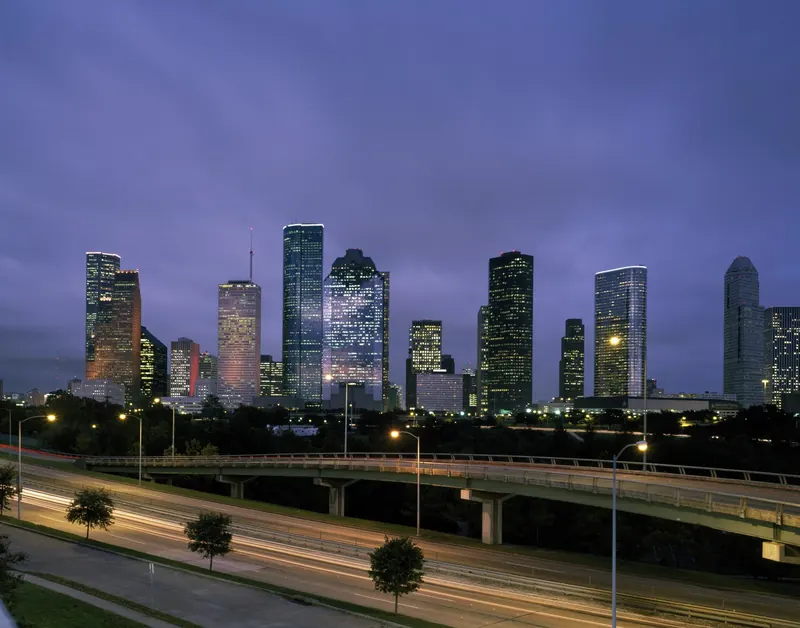
Houston is big, spread out and built in layers: century-old bungalows in the Heights, post-war ranch houses in the inner suburbs, high-rise condos near downtown, garden-style apartment complexes along the freeways, and master-planned subdivisions that keep pushing outward in every direction. A smoke claim here can look very different depending on which of those buildings it involves.
As a Smoke Damage Public Adjuster in Houston, Texas, our job is narrow and specific. We represent the policyholder. We review the policy, document the smoke and fire damage, prepare an estimate, organize the supporting information and present the claim to the insurance company. We are not a restoration contractor and do not clean or repair property. We work with Houston-area clients remotely and on-site when an inspection is needed; we do not have a local office.
Houston's building stock and why it matters for smoke claims
Smoke does not respect room boundaries, and in Houston a few common building patterns shape how far it travels and how hard it is to document.
Slab-on-grade homes with attic HVAC. Many Houston-area houses place the air handler and ductwork in the attic. When a fire starts in a kitchen or garage, the system can pull smoke through return vents and distribute residue into rooms that never saw flame. Those areas are easy to overlook in a first inspection. Our HVAC smoke damage page explains how duct and system issues are usually documented.
Older wood-frame homes. Pier-and-beam and older frame houses in neighborhoods inside the Loop often have plaster, original trim, and open wall cavities that hold odor and fine soot. Matching finishes and addressing hidden residue are frequent points of discussion.
Apartments and condominiums. Houston has a very large rental housing market. A fire in one unit can send smoke through shared attics, corridors and mechanical systems. That creates layered claims: the owner's building policy, the association's master policy where one applies, and individual renters' or unit-owners' policies. See our notes on residential smoke damage claims.
Commercial and industrial property. Restaurants, retail centers, office buildings and warehouses all have their own claim issues, from inventory and equipment to business income.
Regional smoke and fire considerations
Houston sits at the center of a heavy industrial region. The Houston Ship Channel and its surrounding area support one of the largest petrochemical complexes in the world, according to the American Society of Civil Engineers. For many businesses and homes near that corridor, a nearby industrial fire can raise questions about whether residue on a property came from a specific event, and whether the policy language addresses it. Those questions depend heavily on the facts and on documentation made close to the time of the event.
Wildfire is not the first thing most Houstonians think about, but the Texas A&M Forest Service notes that Gulf coastal grasslands and marsh grasses such as cordgrass can burn even under fairly humid conditions, and that South Texas and the lower Gulf Coast become more vulnerable once grasses freeze-cure in winter. Grass and brush fires on the edges of the metro, particularly toward the outer suburbs, can produce smoke that drifts into neighborhoods.
Humidity is the other local factor. Houston's damp climate can make smoke odor linger and interact with moisture in building materials. If water was used to put out a fire, the claim may involve both smoke and water issues at once.
Claim situations we see often in the Houston area
A fire in a neighboring unit or business
In apartment complexes, townhome rows and strip centers, the property with the most visible damage is not always the only one affected. Smoke can move through shared walls, attics and ceiling plenums. A tenant or owner next door may have a claim under their own policy even though the fire started elsewhere.
Kitchen and grill fires in restaurants
Houston's restaurant industry is large and varied. Restaurant fires frequently involve grease-laden smoke, hood and exhaust systems, food inventory, and business interruption. Our commercial smoke damage claims page covers how those losses are usually organized.
Contents claims after a house fire
Clothing, furniture, electronics and household goods absorb smoke. Building a room-by-room inventory is slow work, and the carrier will usually want specific information about each item. Our smoke-damaged contents guide walks through the process, and the contents RCV/ACV calculator can help you understand how depreciation affects a line item.
Claims that stall
When a claim has gone quiet, been partly paid, or been denied, it helps to understand exactly what the carrier relied on. See our pages on delayed, underpaid and denied smoke damage claims.
How we help Houston policyholders
A Smoke Damage Public Adjuster works for you, the policyholder. For a Houston claim, that typically means:
- Reviewing the policy, including any endorsements or limits that affect smoke, contents or additional living expense
- Inspecting and photographing the property, including attic spaces, HVAC components and rooms away from the fire
- Preparing a line-item estimate of building damage and helping organize a contents inventory
- Comparing the carrier's estimate to the documented scope and identifying items that appear to be missing
- Presenting the claim and responding to the insurer's requests for information
Coverage decisions belong to the insurance company, and they depend on your policy and the facts of the loss. We cannot promise a particular result. What we can do is make sure the claim is presented with a complete, organized picture of the damage. The smoke damage claim process page explains the steps in order.
Communities we serve around Houston
We work with policyholders throughout Harris County and the surrounding region, including Pasadena, Baytown, Humble, Spring, Katy, Sugar Land, Pearland, League City and The Woodlands, along with Fort Bend, Montgomery, Brazoria and Galveston counties. Some nearby cities have their own pages, such as Pearland and Katy.
Do you have an office in Houston?
No. We serve Houston and the rest of Texas without local offices. Much of the work, such as policy review and claim correspondence, happens remotely, and we arrange on-site inspections when the claim calls for one.
A chemical plant fire sent smoke over my neighborhood. Can I file a claim?
Possibly, but it depends on your policy language and on what can be documented about the residue and odor at your property. Photos, dates, and notes taken soon after the event are helpful. We can review the policy with you, but we cannot tell you in advance that a claim will be covered.
My apartment had smoke damage from a fire in another unit. Whose insurance applies?
Often more than one policy is involved. The building owner's policy usually addresses the structure, while a renters policy, if you have one, may address your personal property and additional living expenses. The specifics depend on each policy.
Does Houston's humidity affect a smoke claim?
It can affect how odor lingers and how building materials react, especially if firefighting water was involved. That is one reason we document moisture and smoke conditions together when both are present.
Can you help with a commercial property in the Houston area?
Yes. We work with owners and tenants of restaurants, retail, office and warehouse properties. Commercial claims often include building, contents, equipment and business income components, each with its own documentation needs.
Nearby communities we serve
- Pasadena
- Pearland
- Sugar Land
- Katy
- Baytown
- Humble
- Spring
- The Woodlands
- League City