
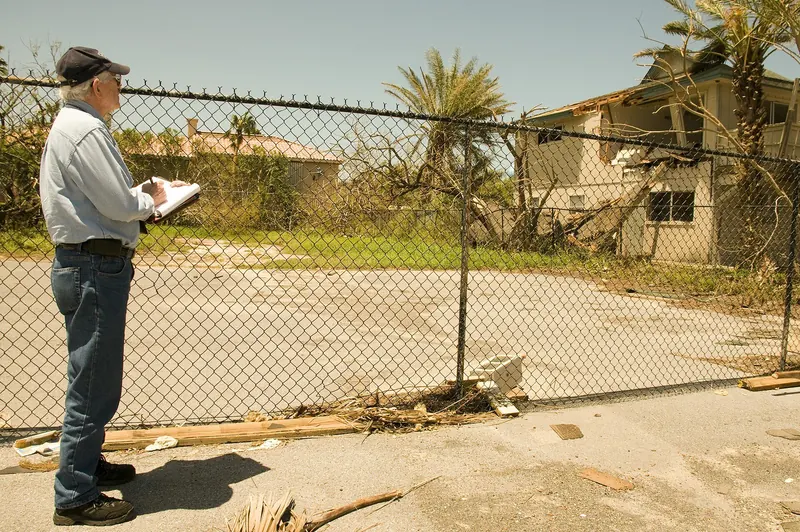
The difference between a public adjuster vs insurance adjuster comes down to one question: who is the adjuster working for? An insurance company adjuster handles the claim on behalf of the insurer. A public adjuster is hired by the policyholder and represents the policyholder. Both work on the same claim, often look at the same damage, and may even agree on much of it. But they have different clients, are paid differently, and have different jobs.
This article explains each role plainly, compares them side by side, and covers the Texas rules that apply to public adjusters. It also explains where attorneys fit, since people often weigh all three after a fire or smoke loss.
We're a public adjusting firm, so we have a point of view. We've tried to describe every role fairly. Insurance company adjusters do necessary work, and many claims are handled well without anyone else involved.
The three kinds of adjusters you might meet
The word "adjuster" covers several roles. On a Texas fire or smoke claim, you might deal with more than one.
Staff adjusters
A staff adjuster is an employee of the insurance company. They handle claims for that insurer, following its procedures and guidelines. They may inspect the property in person, review photos and reports, prepare or review estimates, and communicate the insurer's decisions.
Independent adjusters
An independent adjuster is hired by the insurance company on a contract basis, often through an adjusting firm. Insurers commonly use them when claim volume is high, such as after a large storm or wildfire, or for losses in areas the insurer's staff doesn't cover. Despite the word "independent," they're working on the insurer's behalf for that claim.
Public adjusters
A public adjuster is hired by the policyholder. Under Texas law, a public insurance adjuster acts on behalf of an insured in negotiating for or effecting the settlement of a property claim. A Texas public adjuster can only represent a client who is an insured under the policy, and can't represent the insured while also representing the insurance carrier against which the claim is made.
Both staff and independent adjusters are sometimes called "insurance adjusters" or "company adjusters." For this article, that's what "insurance adjuster" means: someone adjusting the claim for the insurer.
Public adjuster vs insurance adjuster: side-by-side comparison
| Insurance company adjuster (staff or independent) | Public adjuster | |
|---|---|---|
| Who they work for | The insurance company | The policyholder |
| Who hires them | The insurer | The policyholder, by written contract |
| Who pays them | The insurer, through salary or contract; no charge to you | The policyholder, under a contract fee |
| Fee to you in Texas | None | Capped at 10% of the insurance settlement on the claim, including expenses |
| Main job | Investigate and evaluate the claim under the policy for the insurer | Document, prepare, present, and negotiate the claim for the insured |
| Texas licensing covered in this article | Subject to their own licensing rules | Must be licensed by TDI as a public insurance adjuster |
| Can give legal advice? | Not their role | No; Texas law prohibits it |
| Can do your repairs? | Not their role | No; Texas law prohibits participating in repair or restoration on a claim they adjust |
| When they're involved | On every claim | Only if you choose to hire one |
This page focuses on Texas public adjuster rules. The licensing rules for adjusters who work for insurers are separate and aren't covered here.
What an insurance company adjuster does
When you report a fire or smoke loss, the insurer assigns an adjuster. Their work usually includes:
- Confirming the policy was in force and which coverage parts apply
- Inspecting the damage or reviewing photos and reports
- Preparing or reviewing an estimate for building repairs
- Reviewing the contents inventory and applying the policy's valuation terms
- Evaluating additional living expenses or business income, where applicable
- Communicating the insurer's coverage position and payments
Their job is to evaluate the claim under the policy for the insurer. That doesn't mean they're working against you, and many policyholders have good experiences with company adjusters. It does mean that, when there's a disagreement about scope, pricing, or coverage, the company adjuster's role is to represent the insurer's position.
What a public adjuster does
A public adjuster works through the same claim from the policyholder's side. On a fire damage claim or smoke loss, that usually means:
- Reviewing the full policy, including endorsements and conditions
- Inspecting and documenting the damage, including less visible smoke, soot, odor, and HVAC issues
- Preparing a detailed estimate and contents inventory with supporting information
- Presenting the claim to the insurer and responding to its questions
- Reviewing the insurer's estimate and discussing differences
- Keeping the policyholder informed throughout
Our smoke damage claim process page walks through how that works step by step.
A public adjuster doesn't replace the insurance company's adjuster. Both are involved, and the insurer still makes its own decisions on the claim. Public adjusters also can't stop you from talking with your insurance company; TDI lists that among the things public adjusters can't do.
Texas rules for public adjusters
Texas regulates public adjusters under Chapter 4102 of the Insurance Code and TDI rules. The points below come from those sources. For more detail, see our Texas public adjuster rules page.
Licensing
A person may not act as a public insurance adjuster in Texas, or hold themselves out as one, without a license issued by the Texas Department of Insurance. For a firm, TDI rules require that people performing public adjusting acts on its behalf also be individually licensed. If you sign a contract with someone acting as a public adjuster without a license, Texas law lets you void it, and you're not liable for payment for their services under that contract.
You can check a license, complaint history, and disciplinary actions through TDI's Help Line at 800-252-3439.
Contracts
A Texas public adjuster must have a written contract, on a form approved by the commissioner, before acting on your claim. The contract must include the statement "We represent the insured only," a notice that you may cancel within 72 hours of signing for any reason, and a statement that you don't have to enter into the contract to make a claim.
Fees
A Texas public adjuster's total commission may not exceed 10 percent of the insurance settlement on the claim. TDI's rules include the adjuster's expenses and costs within that cap. Fees may be hourly, flat, a percentage, or another method. TDI also points out that the fee can be based on the total settlement, not just the disputed amount, and that you might still owe a fee if the insurer's offer doesn't increase. TDI encourages consumers to ask what the adjuster charges and notes that you can try to negotiate a lower fee.
Limits on what public adjusters can do
- They can't give legal advice or practice law.
- They can't participate directly or indirectly in repairing, rebuilding, or restoring property on a claim they're adjusting.
- They can't accept referral fees from attorneys, contractors, appraisers, or anyone else they refer you to.
- They can't solicit during a natural disaster while it's still happening, and are limited to certain hours for solicitation.
Smoke Damage Public Adjuster is operated by Rise Public Adjusting LLC, TDI License #3356839. You can read more about us.
Where attorneys fit
Some policyholders compare public adjusters with attorneys rather than with company adjusters. The roles overlap less than people think.
A public adjuster handles the claim itself: documentation, estimates, inventories, and negotiation with the insurer. Texas law is clear that a public adjuster can't give legal advice or perform acts that constitute the practice of law.
A Texas-licensed attorney can give legal advice, interpret disputed policy language as a legal matter, advise on your legal rights and deadlines, and file a lawsuit if one is appropriate. Texas law exempts licensed attorneys who meet certain requirements from needing a separate public adjuster license.
An attorney is usually the right professional when:
- The insurer has alleged fraud, misrepresentation, or concealment
- The dispute is about what the policy legally means, not about facts or scope
- You have questions about legal deadlines or filing a lawsuit
- You've been asked to give an examination under oath and want legal advice about it
- The claim involves liability to other people, not just your own property
A public adjuster may recommend a particular attorney, but Texas law prohibits public adjusters from accepting referral fees from attorneys or signing people up mainly to refer them to one.
For example, a homeowner whose claim was accepted but whose smoke damage estimate seems to leave out several rooms may be well served by a public adjuster. A homeowner whose claim was denied on the grounds that they misrepresented something should talk with an attorney.
How to decide what you need
There's no single right answer. Consider:
- Is the claim straightforward and the estimate complete? You may not need anyone beyond the insurer's adjuster.
- Is the disagreement about scope, pricing, contents, or documentation? A public adjuster works in that area. Our pages on underpaid smoke damage claims and denied smoke damage claims explain those situations.
- Is the disagreement about legal rights or a possible lawsuit? Talk with a Texas attorney.
- Do you have the time to manage the claim? Large fire and smoke claims involve many documents and conversations. Our post on fire damage insurance claim tips covers what's involved.
Before hiring any public adjuster, TDI suggests asking questions such as: Will you inspect my damaged property? Will you talk to my insurance company and ask for a larger amount? How long will it take to settle my claim? Ask about the fee in writing, too.
Frequently asked questions
Public adjuster vs insurance adjuster: what is the main difference?
Who they work for. An insurance company adjuster evaluates the claim on behalf of the insurer. A public adjuster is hired by, and represents, the policyholder.
Does the insurance company adjuster charge me anything?
No. The insurer pays its staff or independent adjusters. A public adjuster is paid by the policyholder under a written contract, and in Texas the total fee may not exceed 10 percent of the insurance settlement, including expenses.
Can I still talk to my insurance company if I hire a public adjuster?
Yes. TDI lists keeping you from talking with your insurance company among the things public adjusters can't do. Many policyholders stay involved and are copied on communications.
Is an independent adjuster the same as a public adjuster?
No. An independent adjuster is typically hired by the insurance company on a contract basis to handle claims for the insurer. A public adjuster is hired by the policyholder.
When should I call an attorney instead of a public adjuster?
When the question is legal, such as fraud allegations, the legal meaning of disputed policy language, legal deadlines, or a possible lawsuit. Public adjusters in Texas can't give legal advice.